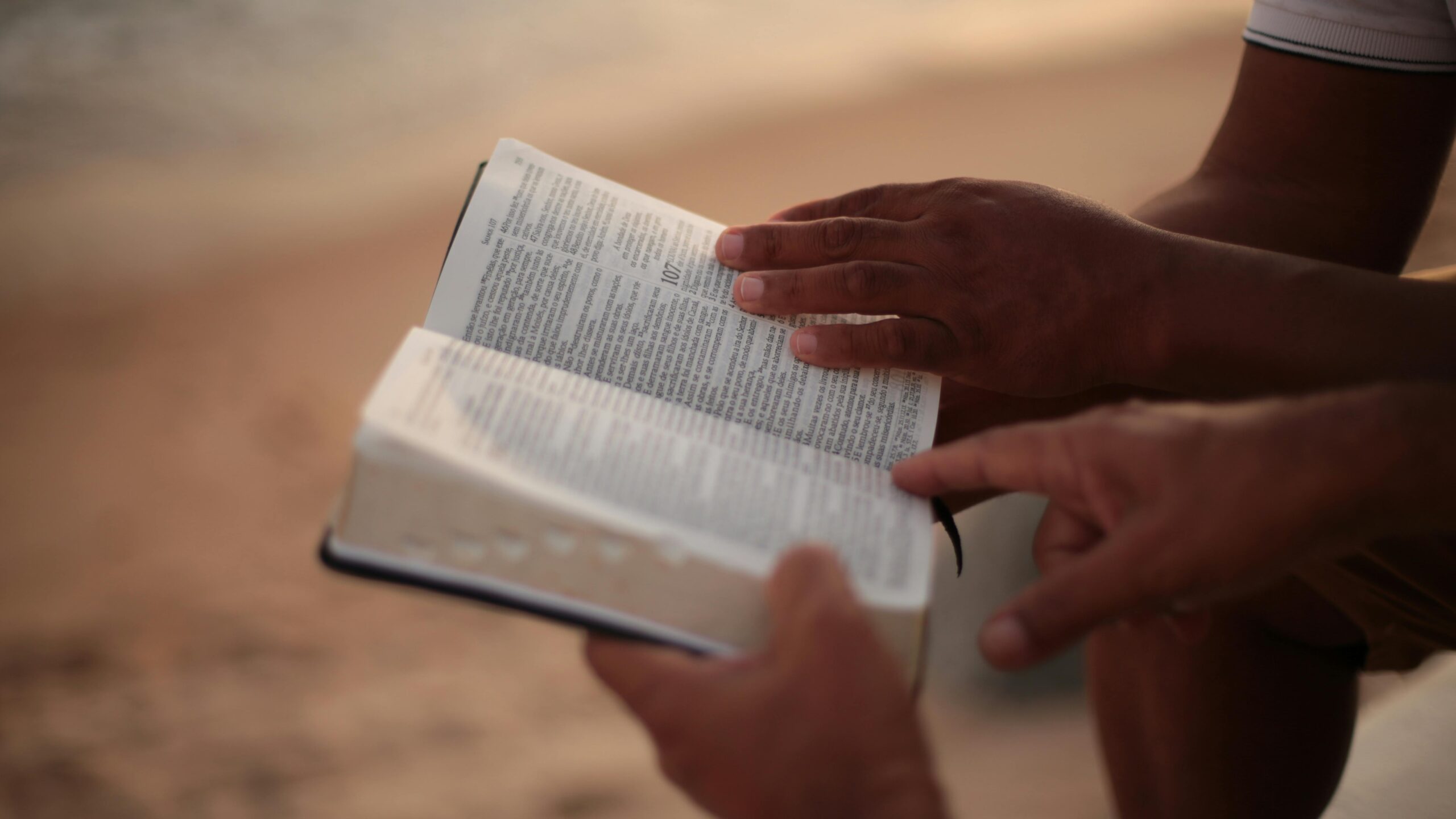
When Your Students Say the Bible is Illogical
“No offense to anyone here…” the student said, shifting her eyes from side to side at the room of kids who definitely were about to disagree with her. “But don’t you think the Bible is a little… illogical?”
The true words of a seventeen-year-old student delivered on a Tuesday afternoon, no doubt coming from a place of curiosity and insecurity. AND in front of at least nine of her peers, all of whom were professing (if not lukewarm) Christians.
I was proud of her bravery.
And I was later ashamed of my response.
I think I sighed, made eye contact with another student, and admirably and briefly defended the faith by noting that the eyewitness accounts of Christ included far more credible sources than Alexander the Great.
True, but dull, and hardly inspiring any faith.
The girl nodded, accepting the answer and listening patiently as one of her classmates continued the point I had started. I smiled, knowing that I hadn’t stepped out of line and that my reputation and job were likely secured by my boring neutrality.
And then it hit me. For weeks, I had been praying for opportunities to be more of a light for Christ in my classroom – especially for those students who need a good witness – and here he’d given me the perfect opportunity. And I don’t think I necessarily responded poorly. I could have said, “Let’s not discuss that right now,” or “Actually, you’re totally wrong and here’s why,” or “Well, obviously you can’t question the Bible.” I did none of those things. But here’s what I wish I had done instead:
I wish I had looked her in the eye, smiled, and said, “You’re right. And that’s what makes it so incredible.”
I wish I’d taken the time to explain that, yes, the Bible is illogical because how on earth does it make sense for a great and perfect God to continue to love such fallen creatures as ourselves? How is the salvation of mankind through the sacrifice of Jesus Christ logical? How is the concept of second birth logical?
These points are not logical by human standards, but that is where faith steps in.
I teach literature, so in many ways, my kids are used to suspending their disbelief, ignoring plot holes, etc. But the problem with today’s generation is that, as they lose an inherent enjoyment of storytelling, they are also losing the ability to appreciate the beauty of mystery. There is no search for deeper meaning – they’ve been conditioned by our society’s post-Enlightenment theorization and experimentation. Hard facts, mathematical equations, science (all of which have their place). They want instant gratification, not a slow and wondrous discovery of that which is true, beautiful, and good.
I wish I’d taken the time to tell her that having faith and believing in that which is bigger than yourself means something because it prioritizes a higher power in our lives. The alternative is that you become the god of your own life. I would’ve pointed out the atrocities of the world around us, of those evil men and women in power, and I would’ve said, “Look at what happens when you become your own god. They think they can become your god, too.”
I wish I’d pointed out that love is also illogical, and the Bible is the greatest love story I’ve ever read. And as an avid fan of romance (albeit clean romance), logic can influence the heart, but it cannot control it. I would’ve cited numerous examples from class, from past English classes, from history. I would’ve told her about the reverence of thousands of years that only diminished when the mystery began to fade. I would’ve pointed out the art and the music and the literature, all inspired by a great document that many consider to be illogical.
But I didn’t say any of those things. And I can only hope to be ready when the Holy Spirit inevitably gives me another chance. Who knows, I might say something radical, like…
If I die tomorrow as a Christian and all I know turns out to be false, then I will have spent a short lifetime worshipping something higher than myself while simultaneously dying to the dead and rotten things inside of me. I will have learned to love recklessly beyond myself.
I see a great number of teachers leaving the profession. It’s too dark, the world is too hopeless, our kids are being exposed to greater and greater evils. In the last week alone, with the third quarter dragging like the weight of an anvil, I find myself wishing I had kept that yellow slip of paper that gave us the option: to stay or leave. Between the rules and regulations, the procedures and projects, the endless overflow of tasks and to-dos, it’s difficult to know how to live out your faith. It’s a tough job, and I also believe that evil knows it can wear us down to the point that we give up on the kids entirely.
Here’s the thing: public school is where the majority of our youth go. I’ve always thought to myself, “If I leave, then who’s going to be the light of Christ in that dark space?” Maybe it’s not sustainable (it isn’t) and maybe it’s not my forever home (it’s not), but it’s what I have now, and I am committed to believing that there are still opportunities to reveal pieces of the Gospel to those who are the most in need of saving.
So here’s what I recommend and here’s what I hope to practice in the future with (ideally) greater efficacy:
- Pray over your space.
- Period. Enough said. Use some quiet time in the morning to do this and watch the atmosphere of your classroom change. Those kids could use all the help.
- Know your boundaries.
- While boundaries shouldn’t necessarily matter, they do if you want to continue to remain in a place where you can reach your students. Know the laws around freedom of speech and religion for your state/school district and then figure out the loopholes… I promise you, some exist. And it’s very possible that others have already figured them out for you. In my case, working in a predominantly Christian community has its benefits, though I typically keep thoughts to a minimum unless a student initiates the conversation.
- Slow down.
- When confronted with questions or opportunities, just pause and breathe. It’s important to consider your response before you give it or at least take a moment to give the Holy Spirit control of the conversation. He placed it there; he can get you through it, but not if you’re panicking and floundering.
- Stay basic.
- Don’t move beyond what you know and can really emphasize. And maybe put yourself in positions where you can practice. For me, this has looked like many years of camp counseling experience, as well as Sunday School and VBS leadership. It’s what made it relatively easy to whip out a statistic on the historical accuracy of the Bible. Practice, practice, practice.
- Use what you love.
- I love stories. I love character arcs and worldbuilding and lovely language and different genres. So approaching the Bible as a story with an exposition, rising action, climax, and resolution is especially appealing to me. Sharing something like that with your students (when they ask for it) really lets the passion shine through… and maybe this will be an understandable way for them to see your faith too.
Ultimately, I know that as a human being and a child of God, my sole responsibility is to go out and make disciples. How that’s done varies from person to person, but I don’t think being a public school educator should stop you from really living out your faith. And maybe, just maybe, you’ll be more prepared than I was the next time one of your kids says, “I think the Bible is just illogical.”
Happy teaching!