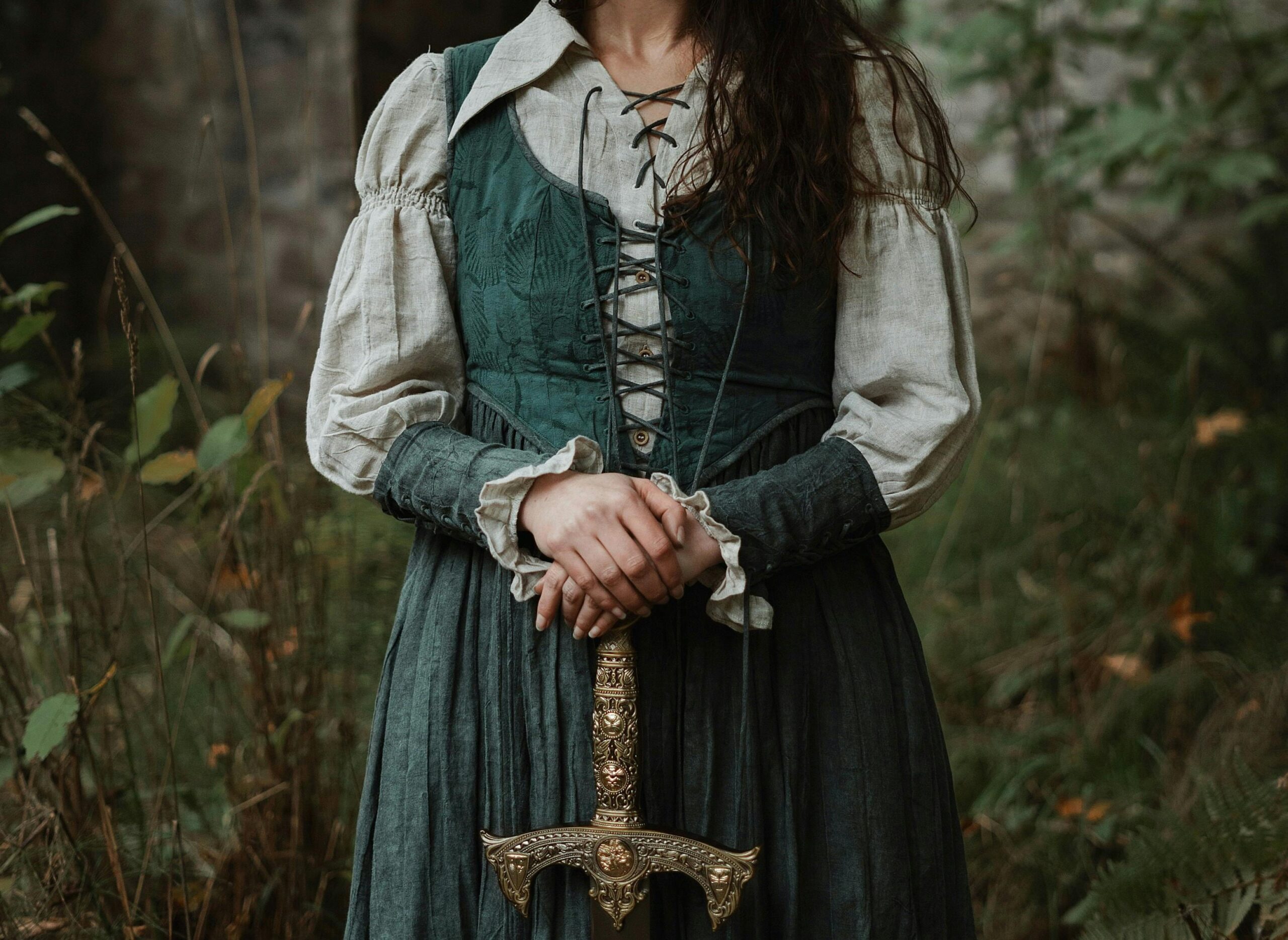
The Joy of Dressing a Character
As a woman with a deep and abiding appreciation for clothes – high-quality clothes that speak to my personality, convictions, and identity – I notice a person’s attire first.
As a writer, clothing my characters is quite possibly one of my favorite things to do.
To me, each outfit says something about who the character is as a person. Colors dictate mood, cut dictates temperament, layers dictate culture, etc. Clothing changes over the course of the novel to dictate how a character is changing. Clothing changes according to shifts in identity and morality.
Clothing is a subtle yet necessary weapon for defining who your characters are.
It can be overdone, yes. I’ve read many stories that were overly concerned with fashion, or novels that interrupt the natural flow to show us a dress or a suit.
Something I’ve noticed as a reader is that those who take the time to detail what their people are wearing truly succeed in making the characters easy to connect to and the story and world more personable and relatable.
Here’s what clothing can do for you:
- Clothing can contribute to worldbuilding realism.
Culture and fashion play a large role in the general task of worldbuilding. For example, instead of giving a year or date, you might feature particular styles or pieces like a corset, trench coat, or toga. If you are writing historical fiction, clothing can indicate a time period. If you’re writing fantasy or science fiction, clothing can give your unique world a particular flavor and distinction. I’ve consistently admired director Peter Jackson’s interpretation of Tolkien’s The Lord of the Rings in regards to attire; if you watch the films, you’ll notice that each group of people – hobbits, dwarves, elves, etc. – all wear distinctly different clothing. How do the different demographics of your story dress? Do your characters dress in a way that is designed to please others, or does the culture of your text allow for more freedom of clothing? What changes are made to a person’s wardrobe as they age and move through society?
Geographical location and the changing of the seasons are also denoted by fashion, as those living in colder climates are more likely to wear layers. Those living in tropical or arid areas are more likely to wear looser, breathable clothing and fewer layers. Colors tend to change with geography and season as well. If you look at our own world and traditional and cultural ways of dressing, colors are prioritized by some nationalities over others. In our western culture, we have seasonal color palettes (summer, autumn, spring, and winter), which assign a set of colors based on that season’s “vibe.” A great example of this would be George R.R. Martin’s Game of Thrones series, in which the style of the Stark family of the cold, bitter North includes heavy layers, fur cloaks, and muted purples and blues, while the style of the Dothraki tribe of the warm plains includes loose clothing (or very little clothing at all).
Additionally, clothing is a huge indicator of social status. We know this from simple examples like that of the classic German fairytale, Cinderella. Cinderella, a servant in the house of her stepmother, is dressed in rags until her fairy godmother offers her the opportunity to commune with royalty at the prince’s ball. To make her a passable guest, her fairy godmother transforms her rags into a lavish ball gown. While this is something I think many writers inherently do, I also think it’s important to plan this ahead of time, before you start writing your book or story. What denotes status, as far as dress is concerned? How does the working class dress? How does the upper aristocracy dress? Learn from Cinderella: if someone were trying to pass as another socio-economic status, what would they wear?
And finally, clothing can indicate a character’s morality or their priorities in life. A classic example of this comes from Pride and Prejudice, in which the middle Bennet sister, Mary, consistently chooses simple clothing (particularly in film adaptations) that aligns with her strict religious and moral beliefs. In one of the books I am writing, I feature two different religious institutions: a high church and a humble monastery. The clothing of both groups signifies the level of piety, as well as the aspects of their faith that they prioritize. Alternatively, revealing or scant clothing can lend itself to scandal and intrigue, which tells you even more about a character’s sense of morality or their personal priorities and convictions.
Ultimately, worldbuilding requires very visual marks and development, which is why the subtle inclusion of clothing and descriptions of attire can bring your world (whether original or not) fully to life.
- Clothing can mark the progress of your character’s development.
While this point is much shorter, it is no less dear to me. In fact, as I am in the process of writing a book that may or may not see the light of day, I recently wrestled with this very issue: How do I show my reader that the main character is changing, possibly for the better? I had several ideas, but this one actually came from my sister.
My character’s clothing is going to shift from a rigid, uniformed standard to a loose, playfully feminine look… and I am so excited to see how that influences her attitude and actions towards others. You see, I already struggle with characterization, but showing that development through something as simple as clothing makes it that much easier for me. Maybe your character is growing up, and they need to shift from playclothes to a more professional look. Maybe your character is now a debutante, and her outfit requires a corset or other forms of shapewear. Maybe your character comes into their own unique sense of style after reaching that coming-of-age point in your contemporary story. Whatever the change, attire can assist.
A note of caution: Be careful in how you describe attire. The flow of your story – the flow of the reader’s thoughts – must stay continuous, no matter what. If you continuously pause to provide us with a whole selection of your MC’s wardrobe, along with a detailed routine of how they go about selecting their clothes in the morning, we’re going to be bored. Unless that is an inherent aspect of your character, it is unnecessary.
Use this technique strategically, like little brass accents on a bookshelf or notes of vanilla in your pastry. It’s not the whole show, so don’t let it run away with the heart of your book. And with time and practice, it can bring life to skeleton outlines or flavorless scenes.
Happy writing!